
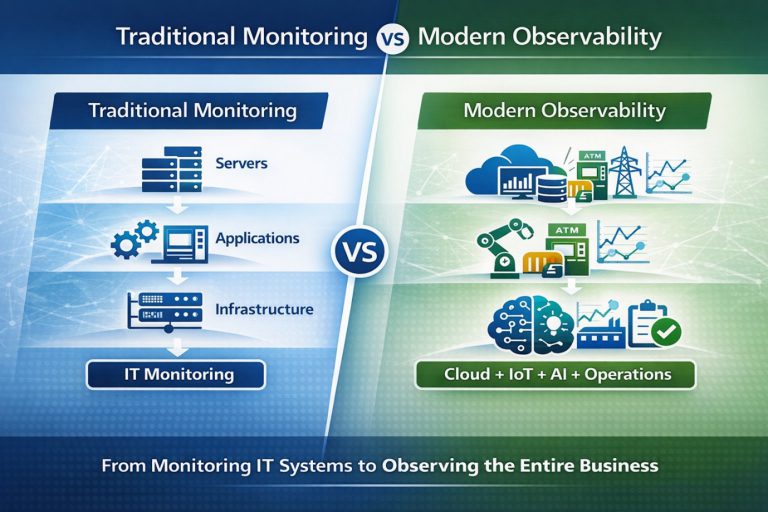
Observability is evolving far beyond traditional IT monitoring
With IoT protocols like MQTT and industrial standards like OPC, observability platforms can now monitor machines, infrastructure, cloud workloads, and physical environments in real time.
This opens interesting opportunities across industries such as banking, healthcare, mining, logistics, and utilities.
I’ve been thinking about what this shift could mean for organisations across Africa.
Observability Beyond IT
Why IoT and Operational Intelligence Are the Next Frontier
For many years, monitoring tools were built to answer a simple question:
“Is the IT system working?”
Servers. Networks. Applications. Databases.
But today technology is no longer confined to the data centre.
It powers ATMs across national banking networks, production lines in factories, refrigeration systems in food logistics, operating theatre equipment in hospitals, and infrastructure that powers our cities.
The next frontier of observability is no longer just about IT.
It is about understanding the real-world operations that IT systems support.
And that shift opens a fascinating opportunity.
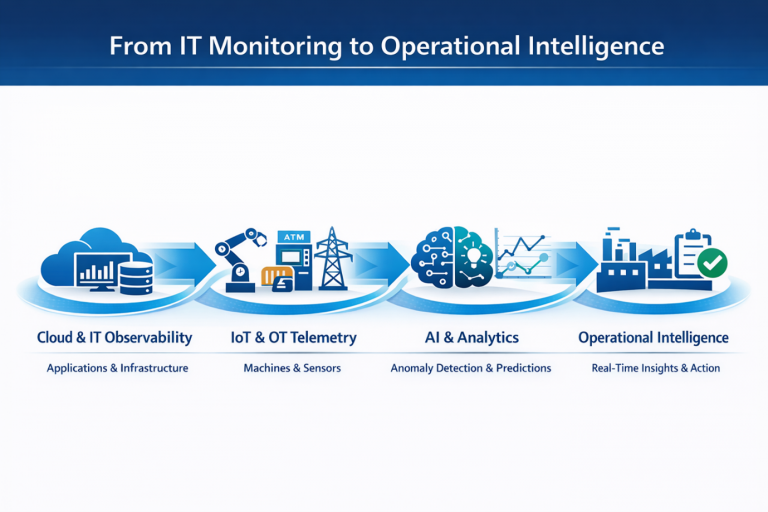
From Monitoring Systems to Observing Operations
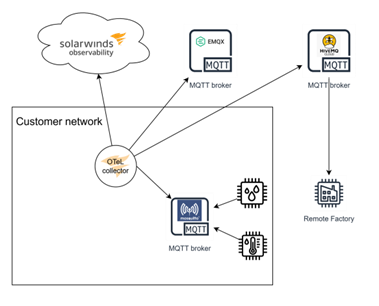
Modern observability platforms are beginning to integrate IoT and Operational Technology (OT) through protocols such as:
- MQTT – lightweight messaging for IoT sensors and devices
• OPC – a widely used industrial protocol for machine communication
These technologies allow telemetry from machines, sensors, and industrial systems to stream directly into observability platforms.
The same platform that once monitored servers and applications can now observe:
- machines on production floors
• ATM hardware across banking networks
• refrigeration systems in logistics environments
• operating theatre equipment in hospitals
• environmental sensors in infrastructure systems
When operational telemetry is combined with traditional IT observability, organisations gain something powerful:
a unified view of digital systems and physical operations.
The Cloud Layer: Where Digital Services Run
While IoT telemetry provides visibility into physical systems, many of the applications that drive these operations now run in the cloud.
Banks run transaction processing platforms in cloud environments.
Manufacturers operate ERP and supply chain systems in cloud infrastructure.
Retail and logistics companies rely on cloud platforms to track inventory, distribution, and fleet operations.
This means that issues in cloud workloads can directly affect real-world operations.
For example:
- A cloud application slowdown may impact ATM transaction processing.
• A failure in a logistics platform could disrupt temperature monitoring in cold-chain distribution.
• A cloud service outage could affect production monitoring on manufacturing floors.
Observability must therefore extend across:
- hybrid and multi-cloud workloads
• containers and Kubernetes environments
• application performance and databases
• network connectivity between cloud and operational sites
When cloud observability is combined with operational telemetry, organisations gain end-to-end visibility across their entire operational ecosystem.
Real Opportunities Across Industries
The potential applications of this approach span multiple sectors.
Banking: ATM Network Intelligence
ATMs are effectively distributed IoT devices.
Each machine includes hardware sensors, operating systems, network connectivity, and transaction processing software.
Observability platforms can detect:
- hardware degradation
• connectivity failures
• abnormal temperature conditions
• transaction system errors
before they impact customers.
For banks managing thousands of ATMs, this creates predictive operational visibility.
Healthcare: Operating Theatre Readiness
Hospitals rely on a range of interconnected systems within operating theatres:
- anesthesia machines
• surgical imaging equipment
• patient monitoring systems
• sterilisation systems
• environmental controls
By integrating telemetry from these systems, hospitals can monitor:
- equipment availability
• abnormal device behaviour
• environmental conditions required for surgery
This improves coordination between clinical engineering, IT teams, and theatre operations, reducing delays and improving patient care readiness.
Pharmaceutical and Life Sciences: Protecting the Vaccine Cold Chain
Vaccines and biologics must remain within strict temperature ranges throughout storage and distribution.
IoT sensors can monitor:
- refrigeration units
• cold storage facilities
• transport containers
• warehouse environments
Observability platforms can detect:
- temperature deviations
• refrigeration failures
• power disruptions affecting cold storage
before inventory is compromised.
This improves regulatory compliance while protecting critical medical supplies.
Retail and Food Logistics: Protecting Perishable Supply Chains
The same cold-chain principles apply across food distribution.
Supermarkets and logistics providers rely on refrigeration across:
- warehouses
• refrigerated delivery vehicles
• retail refrigeration units
IoT telemetry allows organisations to monitor temperature stability and equipment performance in real time.
Preventing a single refrigeration failure can save millions in spoiled inventory.
Manufacturing: Production Line Intelligence
Manufacturing plants already generate enormous operational data through industrial control systems.
Integrating this data into observability platforms allows organisations to identify:
- production bottlenecks
• machine downtime patterns
• equipment performance degradation
This enables predictive maintenance and improves operational uptime.
Mining: Equipment and Safety Monitoring
Mining operations rely on continuous monitoring of heavy equipment and environmental conditions.
Observability platforms can integrate telemetry from:
- conveyor systems
• drilling equipment
• ventilation systems
• underground safety sensors
This improves both safety monitoring and operational continuity in high-risk environments.
Energy and Utilities: Monitoring Critical Infrastructure
Energy providers manage large distributed infrastructure networks including:
- substations
• transformers
• renewable energy generation sites
• grid monitoring sensors
Streaming telemetry from these systems allows utilities to detect:
- transformer overheating
• abnormal power fluctuations
• equipment degradation
before they impact service reliability.
Where AI and Observability Converge
As observability expands across cloud systems, infrastructure, machines, and sensors, the amount of telemetry generated becomes enormous.
Machines, applications, and sensors can generate millions of data points every minute.
No operations team can interpret that volume of data manually.
This is where AI and machine learning are beginning to transform observability.
Instead of simply triggering alerts when thresholds are breached, modern platforms analyse telemetry patterns to identify anomalies and emerging risks.
AI-driven observability could detect:
- subtle performance degradation in a cloud application
• abnormal machine vibration indicating equipment failure
• unusual refrigeration behaviour in cold-chain systems
• infrastructure conditions that historically precede transformer failures
This moves operations teams from reacting to incidents toward something far more powerful:
predictive operational intelligence.
A Strategic Opportunity for Technology Partners
Historically, monitoring solutions were sold almost exclusively to IT departments.
But as observability expands into IoT and operational telemetry, the conversation changes.
Partners can now engage with:
- operations teams
• engineering departments
• facility managers
• manufacturing leaders
• infrastructure operators
Instead of simply monitoring IT systems, partners can help organisations build real-time operational intelligence platforms.
A Final Thought
The real question is no longer:
“How do we monitor IT systems?”
The real question is:
“How do we observe the entire business operation — from digital infrastructure to physical assets?”
Across Africa we see enormous potential in this shift.
From banking and healthcare to mining, manufacturing, logistics, and utilities, organisations are investing heavily in connected infrastructure.
Yet many still lack unified operational visibility.
By combining observability platforms with cloud monitoring, IoT telemetry, industrial protocols, and AI-driven analytics, we can begin to build environments that are:
- more resilient
• more predictable
• more intelligent
And that is where the next evolution of observability begins.
Where are you seeing the biggest opportunity for IoT + observability + AI in your industry?
— Glenn Lazarus
CEO | ATS Network Management