
Observability in Healthcare
Healthcare systems don’t just support operations.
They support lives.
When something fails in a hospital environment, the impact isn’t just downtime — it can affect patient care, treatment timelines, and critical decisions in real time.
Yet modern healthcare environments are becoming increasingly complex:
- connected medical devices
• patient monitoring systems
• cloud platforms
• operational infrastructure
• growing cybersecurity threats
The challenge is no longer visibility.
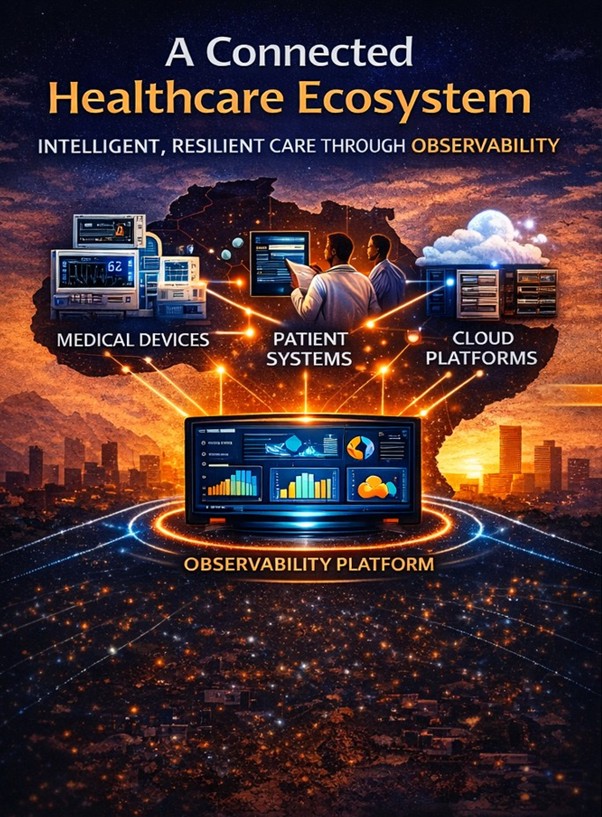
It’s creating a single, real-time view across clinical, operational, and security systems — and responding instantly when something goes wrong.
In this article, I explore how observability, IoT telemetry, and unified incident response are enabling intelligent, resilient healthcare operations — particularly in rapidly evolving environments across Africa.
From Monitoring Systems to Intelligent, Life-Critical Operations
Healthcare environments have evolved into highly interconnected ecosystems where technology plays a direct role in patient care.
Modern hospitals rely on:
- electronic health record (EHR) systems
• patient monitoring devices
• imaging and diagnostic systems
• operating theatre equipment
• hospital networks and infrastructure
• cloud-based healthcare platforms
Each of these systems generates telemetry, alerts, and operational signals.
But in healthcare, the stakes are different.
Every second matters.
The New Reality: Clinical + Operational + Security Complexity
Healthcare organisations face three parallel challenges:
- Clinical Complexity
Patient care systems must operate continuously and accurately
- Operational Complexity
Highly distributed systems across departments and facilities
- Security Risk
Healthcare is one of the most targeted industries for cyberattacks
Traditionally, these environments have been managed in silos:
- biomedical engineering teams
• IT operations teams
• security teams
But patient care depends on all of them working together seamlessly.
Operating Theatres: Where Failure Is Not an Option
Operating theatres represent one of the most critical environments in healthcare.
They rely on interconnected systems including:
- anesthesia machines
• surgical imaging systems
• patient monitoring devices
• sterilisation systems
• environmental controls (temperature, airflow)
Any failure in these systems can result in:
- delayed procedures
• cancelled surgeries
• increased clinical risk
By integrating telemetry from these systems into observability platforms, hospitals can monitor:
- equipment availability in real time
• abnormal device behaviour
• environmental conditions required for surgery
• system dependencies across IT and medical devices
This ensures operating theatres remain fully prepared and operational when needed most.
Patient Monitoring and Real-Time Clinical Insight
Modern healthcare environments are increasingly data-driven.
Patient monitoring systems generate continuous streams of data including:
- vital signs
• device performance
• alert thresholds
• clinical system interactions
Observability platforms can ingest and correlate this data with infrastructure and application telemetry.
This enables:
- earlier identification of system-related issues
• improved prioritisation of critical alerts
• better coordination between clinical and technical teams
In high-pressure environments such as emergency departments, this level of visibility can significantly improve response times and patient outcomes.
From Alert Overload to Clinical Incident Intelligence
Healthcare environments generate large volumes of alerts from:
- patient monitoring systems
• medical devices
• IT infrastructure
• clinical applications
Without correlation, this leads to:
❌ alert fatigue
❌ missed critical signals
❌ delayed response
Unified incident response platforms help by:
- correlating alerts across systems
• prioritising critical incidents
• providing full context for decision-making
This ensures that the right teams respond quickly to the most critical situations.
Reducing MTTA and MTTR in Healthcare
In healthcare, response time is critical.
Faster MTTA
- automated alert routing
• prioritised clinical alerts
• immediate escalation to relevant teams
Faster MTTR
- unified incident visibility
• cross-team collaboration
• real-time operational insights
• structured response workflows
This reduces delays and ensures issues are resolved before they impact patient care.
Cybersecurity in Healthcare Environments
Healthcare systems are increasingly targeted by cyber threats, including:
- ransomware attacks
• unauthorised access to patient data
• medical device vulnerabilities
What makes healthcare unique is that security incidents often have direct operational impact.
Observability platforms that integrate security signals enable:
- detection of unusual system behaviour
• correlation of security and operational events
• faster identification of threats affecting clinical systems
This creates a single source of truth across operations and security.
The African Context: Expanding Access and Resilience
Across Africa, healthcare systems face additional challenges:
- limited infrastructure in certain regions
• high patient volumes
• rapid adoption of mobile and digital health platforms
• resource constraints across facilities
At the same time, there is significant innovation in:
- mobile healthcare services
• remote diagnostics
• telemedicine platforms
This creates environments where:
- physical healthcare systems
• digital platforms
• mobile ecosystems
must operate together seamlessly.
Observability platforms enable healthcare providers to:
- improve system reliability across distributed environments
• support remote and mobile healthcare delivery
• respond faster to operational and clinical incidents
• scale services more effectively
For healthcare systems across Africa, this represents an opportunity to build resilient, scalable, and intelligent care environments.
The Bigger Shift: Intelligent Healthcare Operations
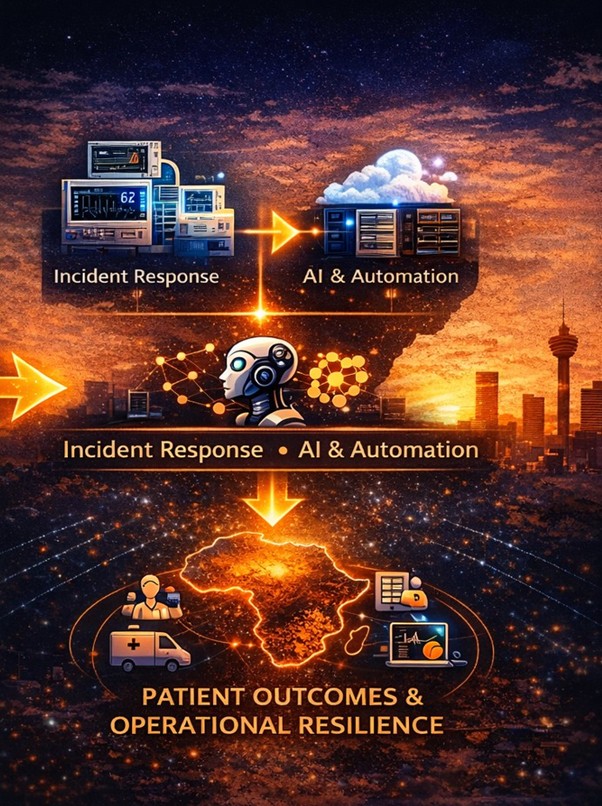
When healthcare organisations combine:
- observability across clinical and IT systems
• real-time telemetry from medical devices
• unified incident response
• AI-driven analytics
• integrated security visibility
they move toward something far more powerful:
intelligent healthcare operations.
This means:
- earlier detection of issues
• faster response to incidents
• improved patient prioritisation
• better resource utilisation
A Final Thought
In healthcare, technology is no longer just supporting operations.
It is directly supporting patient care.
Observability platforms are evolving into systems that provide real-time insight into both clinical and operational environments.
The organisations that embrace this shift will not only improve efficiency.
They will improve outcomes and deliver lifesaving healthcare more efficiently.
And in healthcare, that is what matters most.
Glenn Lazarus
CEO | ATS Network Management